Mexico Oil & Gas "Apertura" - Round 2 – 1st Call for Bids: 15 Shallow Water Blocks
Mexico Oil & Gas "Apertura" - Round 2 – 1st Call for Bids: 15 Shallow Water Blocks

Mexico launched on July 20th the first call for Round 2 of its Oil & Gas "Apertura", which covers 15 shallow water offshore blocks.
The blocks are located along the coasts of Tampico, Misantla, Veracruz and southeastern Gulf of Mexico area. The bidding process will take 8 months with awards of the offshore blocks are scheduled for March 2017.
Shallow Waters and Above-Ground Risks
Successful bidders (e.g. IOCs) for the blocks located in shallow water of the Gulf of Mexico will sign a production sharing contract for 30 years with two possible extensions of five years.
These shallow water blocks present above-ground non-technical risks, that if inadequately managed often translate into project delays and cost overruns, and operational interruptions during the project life cycle.
The area encompassed by the Round 2 shallow water blocks is geographically extensive and environmentally diverse, and it includes sensitive areas with high biodiversity as well as communities that rely on natural resources.
Initial engagement with stakeholders has identified environmental and social concerns, and communities’ needs among those living closest to the oil and gas areas, including for example:
· Impacts to ecosystems due to spills and leaks and wastewater discharges,
· Increase in vehicular and vessel traffic,
· Impact on existing local infrastructure and services,
· Community health and safety,
· Local content requirements,
· Income generating opportunities,
· Skills training,
· Education, and
· Basic services.
These challenges and expectations require a contextualized and integrated approach, and innovative solutions to manage the sustainability non-technical risks to ensure the success of the Apertura and oil and gas business ventures in Mexico.
How HSE International, LLC can help
The successful IOCs need to develop and adopt, from the onset, strategies based on a framework that integrates social, economic, environmental, and institutional factors, to have a clear vision for how to operate in the area.
HSE International’s experience working in the oil and gas industry, in environmentally sensitive and complex social settings, and our international delivery capabilities working with local strategic partners in Mexico, can help IOCs develop and implement strategies based on a sustainability framework.
HSE International’s Sustainable Development Analysis (SDA) combines social, economic, environmental, political and institutional analysis to improve the understanding of the linkages between development dynamics and the political and social structures that shape development outcomes.
We have the knowledge and experience to assist IOCs develop and implement sustainable development frameworks to address these issues early in the project cycle, helping Companies’ manage the above-ground risks and impacts, and contribute to earning and maintaining the regulatory and social licenses to operate.
HSE International has worked in the Mexico’s oil and gas sector since 2008, including supporting IOCs, NOCs and Regulators, along the oil and gas value chain. We have developed a process to address social, environmental, security and safety risks each step of the way, and are eager to contribute to a more sustainable development of the oil and gas sector in Mexico.
For more information on how to manage above-ground non-technical risks, read HSE International’s post http://www.hseinternational.com/news-insights/2015/5/mexicos-oil-gas-apertura-shallow-waters-and-above-ground-risks, and email us at: solutions@hseinternational.com
New Oil & Gas discovery in Mexico's shallow waters increases stakeholder expectations
Successful IOCs to face greater non-technical challenges and risks

The Mexican national oil company Pemex (NOC), has recently announced one of its biggest discoveries in years, unveiling new shallow-water oil fields in the southern Gulf of Mexico. The timing of the discoveries, only a month away from the opening of bids, increases the interest and attractiveness of the shallow-water tenders, while at the same time raises sustainability questions and expectations.
There are four new fields with important hydrocarbon potential in shallow-waters of the area known as Litoral of Tabasco and to a structure near the Cantarell complex, and located close to the shallow water areas out for tender. The NOC estimates the fields could be developed for production in approximately 16 – 20 months and achieve 200 thousand barrels of crude oil and 170 million cubic feet of gas per day. Taking into account the short period for its development and the size of the deposits found, these discoveries may represent the greatest exploratory success of Pemex in the last 5 years according to the NOC.
Mexico’s Oil and Gas industry has been and continues to be a pillar of the country’s economy, politics and society, with the NOC dominating the space now and at least in the near term. It is therefore not surprising that these recent discoveries may further heighten stakeholder expectations of the Ronda 1 shallow-water results, including those of local communities and institutions in the region, and other national and international stakeholders.
Successful international oil and gas companies (IOC) on July 15th, the new investors and operators in the Mexican oil and gas sector, will face greater risks and challenges than the NOC. Experience indicates that stakeholder challenges and social risks will be far more complex for the IOCs (and their local supply chain), requiring a real understanding of the issues, innovative strategies to manage non-technical risks, and engagement from the onset.
Click the link that follows for additional insights into managing non-technical risks to ensure the success of new oil and gas business ventures in Mexico. http://www.hseinternational.com/news-insights/2015/5/mexicos-oil-gas-apertura-shallow-waters-and-above-ground-risks
Mexico's Oil & Gas "Apertura"
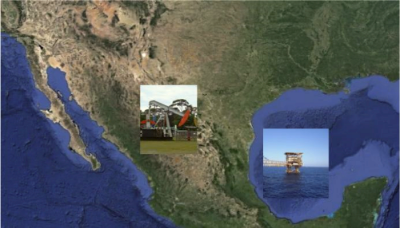
Mexico is making concerted efforts to bring in the private sector into its potentially lucrative hydrocarbon sector. This “apertura” or “opening” is a process that much like the one in Venezuela in the early 1990s brought in considerably foreign investment and technology to the national industry.
The Country boasts large reserves and massive resources of conventional and unconventional hydrocarbons both onshore and offshore, and the new energy reform approved in December 2013 is intended to provide the flexibility necessary for the opening of the hydrocarbon sector to private and foreign participation, and to produce them wisely.
The initial phase of the Mexican Oil & Gas “Apertura” involves transferring producing assets that are currently under service contract arrangements. Pemex is then planning to enter into joint venture arrangements with private or foreign sector entities (i.e. farm-out agreements) for mature fields, deep water, and extra heavy crudes requiring capital investment and technological expertise. In addition, the Mexican government will go through a bidding round (Round 1) in which 109 exploration blocks and 60 producing fields, including deep and shallow water, and unconventional blocks will be offered up for investment. All this is expected to happen fast, started in 2014 and will continue in 2015.
The energy reforms also established a new HSE regulatory body for the oil and gas sector, and the Decree enacting the Law of the National Agency of Industrial Safety and Environmental Protection of the Hydrocarbons Sector became effective August 12, 2014. The ASEA (Spanish acronym for the Agencia) was created under the Ministry of Environment and Natural Resources (SEMARNAT), with technical and procedural autonomy, tasked with regulating and supervising industrial and operational safety, as well as environmental protection of the Hydrocarbon Sector. In summary, HSE risks and impacts of oil and gas will be regulated and supervised by ASEA.
The Energy Reforms only provide generalized conceptual legislation, but they also specify that detailed legislation must be enacted within 12 months for the development of additional environmental regulations governing the energy sector.
This “opening” of the Mexican hydrocarbon sector can lead to important positive benefits, including considerable increase in production, reserves, GDP growth, creation of jobs, provision of goods and services, additional injection of foreign investment, and infrastructure growth.
It is also possible to concurrently obtain those positive benefits while ensuring that the Apertura is implemented protecting the environment, safeguarding the people, and guaranteeing sustainability. This requires the use of good international industry practices and available technologies, and to have proper regulation and a rigorous and effective supervision. Legislation is in place and implementation is unfolding.
Now is the time for foreign investors to engage, understand the HSE and sustainable development context within the country oil and gas sector, and prepare to capitalize on the Mexican opportunity provided by this important episode in Mexico’s hydrocarbon sector.